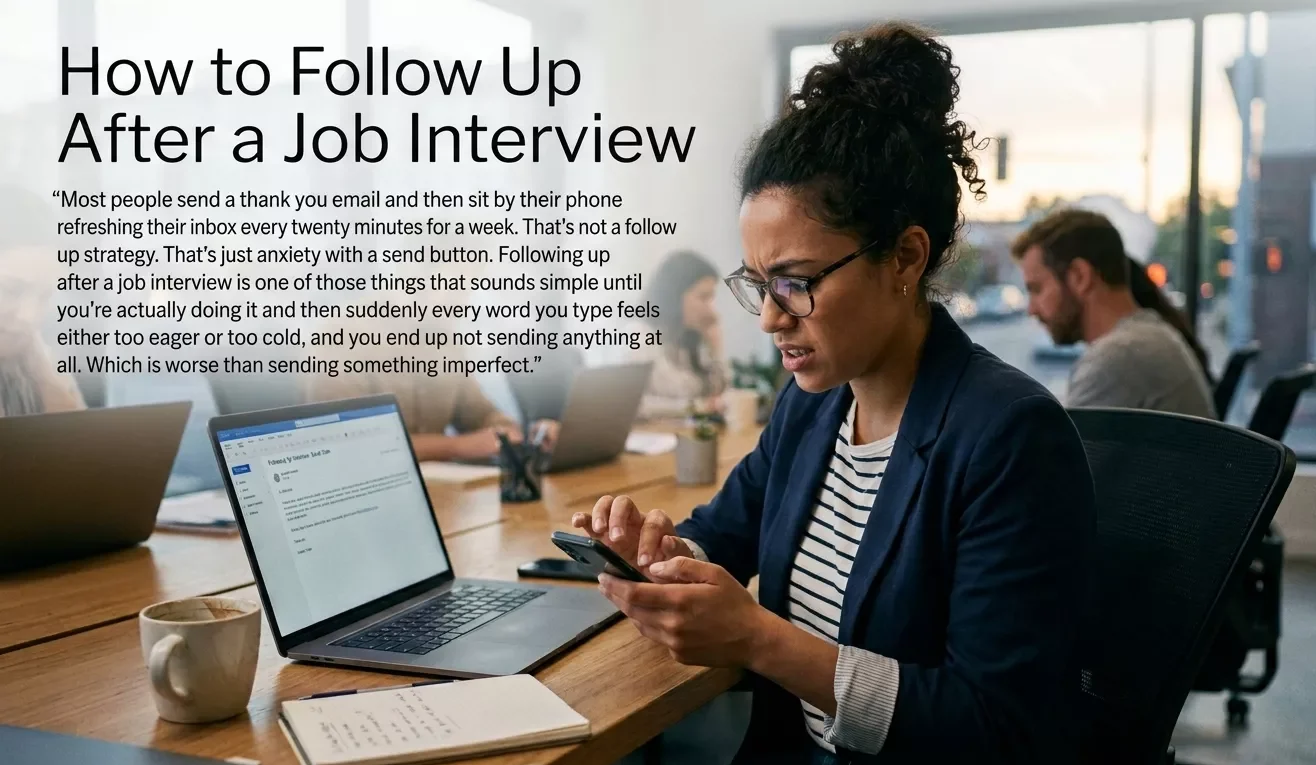
Most people send a thank you email and then sit by their phone refreshing their inbox every twenty minutes for a week. That’s not a follow up strategy. That’s just anxiety with a send button. Following up after a job interview is one of those things that sounds simple until you’re actually doing it and then suddenly every word you type feels either too eager or too cold, and you end up not sending anything at all. Which is worse than sending something imperfect. Lets learn How to Follow Up After a Job Interview?
So here’s how to actually do it. What to send, when to send it, what to say when you still haven’t heard back two weeks later, and what not to do if you want to keep the door open.
Table of Contents
The Thank You Email Nobody Actually Sends Within 24 Hours
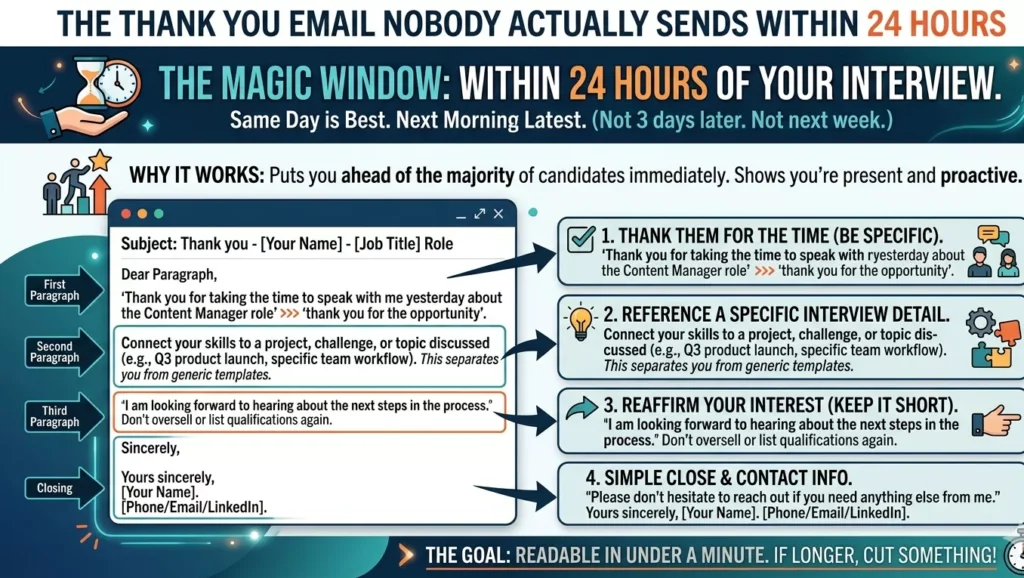
Within 24 hours of your interview. That’s the window. Not three days later. Not the next week when you “get around to it.” The same day if you can, the next morning at the latest.
Most candidates don’t do this. Which means doing it puts you ahead of the majority of people who interviewed for the same role — before you’ve done anything else.
The email doesn’t need to be long. It really doesn’t. Three to four short paragraphs is all you need:
First paragraph — thank them for the time. Specific is better than generic. “Thank you for taking the time to speak with me yesterday about the content manager role” beats “thank you for the opportunity” every single time. It shows you were present in the conversation, not just going through the motions.
Second paragraph — reference something specific from the interview. One real thing you discussed. A project they mentioned, a challenge the team is working through, something that stood out in the conversation. This is the part that separates a real thank you email from a template someone copied off a careers website. Anyone can say they’re excited about the role. Not everyone can reference the specific thing the hiring manager said about their Q3 product launch and connect it back to something they bring to the table.
Third paragraph — reaffirm your interest. Keep it short. One sentence saying you’re looking forward to next steps is enough. Don’t oversell. Don’t list your qualifications again. They already have your resume.
Close — something simple. “Please don’t hesitate to reach out if you need anything else from me.” Then your name and contact info.
That’s it. The whole email should be readable in under a minute. If it takes longer than that, cut something.
What “Something Specific From the Interview” Actually Looks Like
This trips people up so it’s worth spelling out with a real example. Generic version: “I really enjoyed learning more about the company culture and I’m excited about the opportunity to contribute to your team.” That could have been written by anyone who interviewed anywhere for anything. It tells the hiring manager nothing.
Specific version: “The challenge you mentioned around scaling the content operation without losing the brand voice is something I’ve navigated directly and I’d love to bring that experience to how your team approaches it over the next year.”
That’s a sentence that could only have been written by someone who was actually in that conversation. It shows you listened. It connects your experience to their actual problem. And it gives the hiring manager something concrete to remember about you when they’re comparing candidates.
You don’t need to write a masterpiece. You just need one specific detail that proves you were paying attention. This matters especially if you’re going for a technical or design role, someone interviewing for a position where they need to show problem-solving instincts, like a candidate who’s read up on what a UI UX designer actually does on the job, knows that referencing a specific design challenge from the interview lands better than generic enthusiasm.
You Haven’t Heard Back — When Do You Follow Up Again?
This is where most people either go quiet completely or send three emails in five days and wonder why the recruiter stopped responding. The answer depends on what timeline they gave you at the end of the interview.
If they gave you a timeline: wait until that date passes, then follow up one business day after. If they said “we’ll be in touch by end of next week” and end of next week comes and goes send a short note the following Monday or Tuesday. Not the same day the deadline passes. Give it one extra day.
If they gave you no timeline: wait one week after your thank you email before following up again. One week is professional. Three days reads as impatient. Two weeks reads as disinterested.
The follow up email in this case is even shorter than the thank you note. Something like:
“Hi [Name], I wanted to follow up on my interview from [date] for the [role] position. I remain very interested in the opportunity and wanted to check if there are any updates on the timeline or next steps. Happy to provide any additional information if that would be helpful.”
That’s it. Short, direct, no desperation in the language. You’re not begging. You’re just checking in like a professional who’s interested in the role. And while you wait — use that time well. If you’re still early in your career and figuring out which direction to go, it’s worth exploring how to become a UI UX designer with no experience or looking at which industries are hiring aggressively right now.
Still Nothing After Two Emails — Do You Send a Third?
Yes. Once. And then you stop.
Two weeks after your second follow up with no response send a final short note. Keep it even shorter than the last one. Something like:
“Hi [Name], I know you’re likely managing a busy hiring process. I wanted to reach out one more time to express that my interest in the [role] remains strong. If the timing hasn’t worked out, I completely understand but I’d welcome the chance to stay in touch for future opportunities.”
Then leave it there. Three total emails the thank you, one follow up, one final note is the professional limit. After that, the ball is in their court and continuing to push starts working against you.
The reason for the final note isn’t really about this specific role anymore. It’s about leaving a clean, professional impression for the next time a role opens up. Hiring managers remember people who were gracious even when they didn’t get the job. That matters more than most people realize.
The Mistake That Kills Your Chances Even After a Good Interview
Sending a follow up that reads as desperate. Most people don’t realize they’re doing it. The words sound professional on the surface. But certain phrases give it away immediately:
“I just wanted to make sure you received my previous email” they received it. They’re busy. This line implies they forgot about you, which isn’t a great frame.
“I’m very eager to hear back and would love to know if I’m still being considered” the word “eager” plus “would love to know” plus asking whether you’re still in the running all in one sentence reads as anxious, not enthusiastic.
“I’ve been thinking about our conversation a lot and wanted to reach out again” a lot of follow up emails, not at all. They don’t need to know how often you’ve been thinking about this.
The tone you want is calm and confident. You’re interested. You’re available. You’re a professional who has other things going on. Even if you really, really need this job, the follow up email can’t show that. Keep the language neutral, short, and factual. This holds true whether you’re chasing a design role, a tech position, or even something like remote bookkeeping work — the tone of a follow up email says as much about your professionalism as anything you said in the room.
When They Say “We’ll Be in Touch” and Then Aren’t
Sometimes hiring processes slow down or stop completely for reasons that have nothing to do with you. Budget freezes. Internal restructuring. A role gets paused mid-search. A strong internal candidate appeared. These things happen constantly and the candidate usually never finds out why.
If you’ve sent your three emails and heard nothing, the honest move is to keep your search moving. Not because this role is definitely gone, but because sitting and waiting for one company while your search stalls is the worst outcome for you regardless of how the role lands.
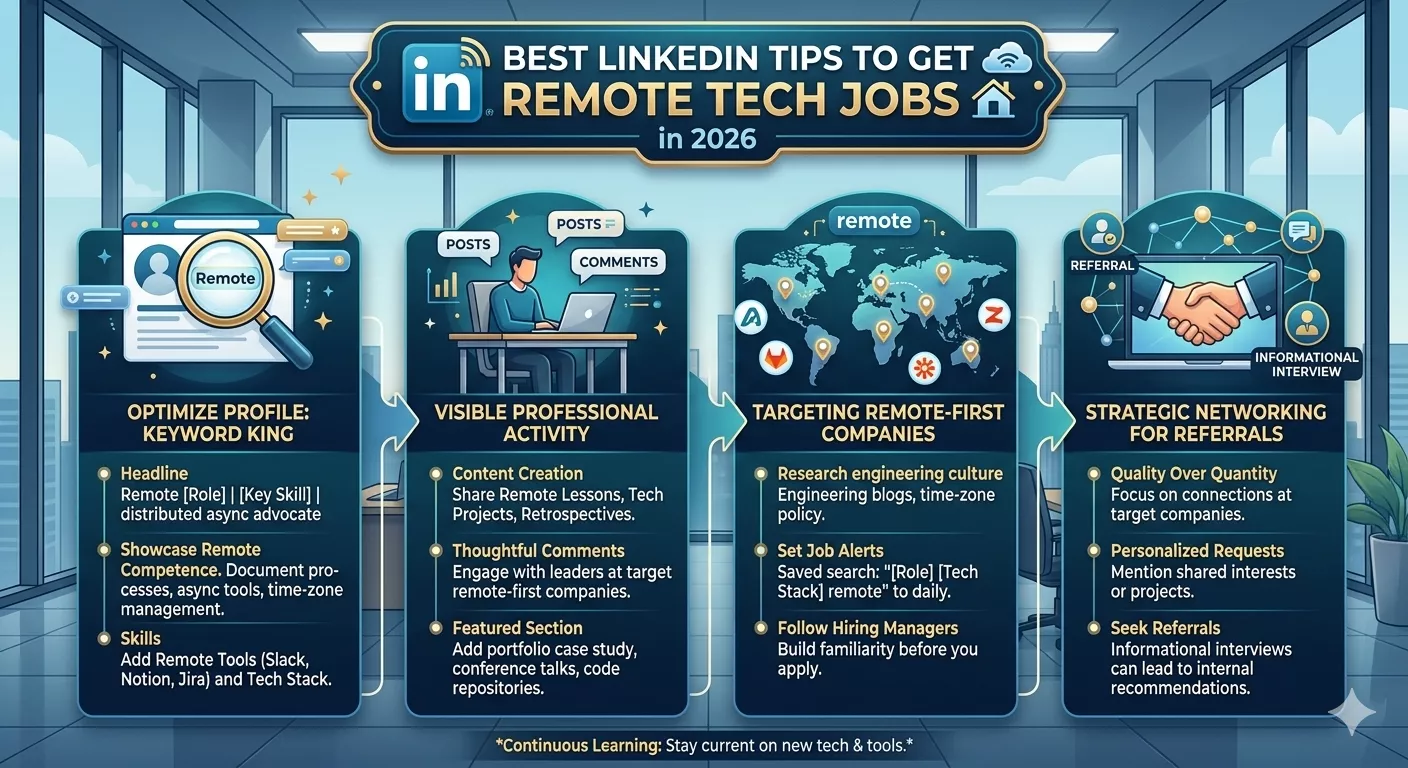
One thing that does help in this situation: connect with the hiring manager on LinkedIn if you haven’t already. You don’t need to send a note with the connection request. Just connect. If something does come up for them down the line, you’re already in their network. That’s a low-effort move that keeps the relationship open without sending another email. While you’re at it, make sure your LinkedIn profile is actually working for you — there are specific LinkedIn tips that help you get noticed for remote tech jobs that most people skip over even when they’re actively searching.
Following Up With the Recruiter vs the Hiring Manager — Which One?
If you interviewed with both follow up with both, but separately. The thank you email goes to everyone who was in the room. If three people interviewed you, three people get personalized thank you emails. Each one should reference something specific that came up in the conversation with that particular person. Yes, this takes more time. Yes, it’s worth it.
For the follow up emails after that go through whoever set up the interview. Usually that’s the recruiter or HR contact. They’re the ones managing the process and they’re the right person to ask about timeline and next steps. Going directly to the hiring manager repeatedly for status updates can come across as bypassing the process.
The exception: if the hiring manager gave you their direct contact and told you to reach out with any questions use it. They opened that door. Walk through it.
If you’re applying for roles in Texas or other high-paying markets, knowing your worth matters before you even get to the follow up stage. Understanding what the highest paying jobs in Texas actually look like helps you gauge whether the role you’re following up on aligns with where your career is heading — and gives you context if salary comes up in the next conversation.
The Fastest Way to Ruin a Good Interview in the Follow Up
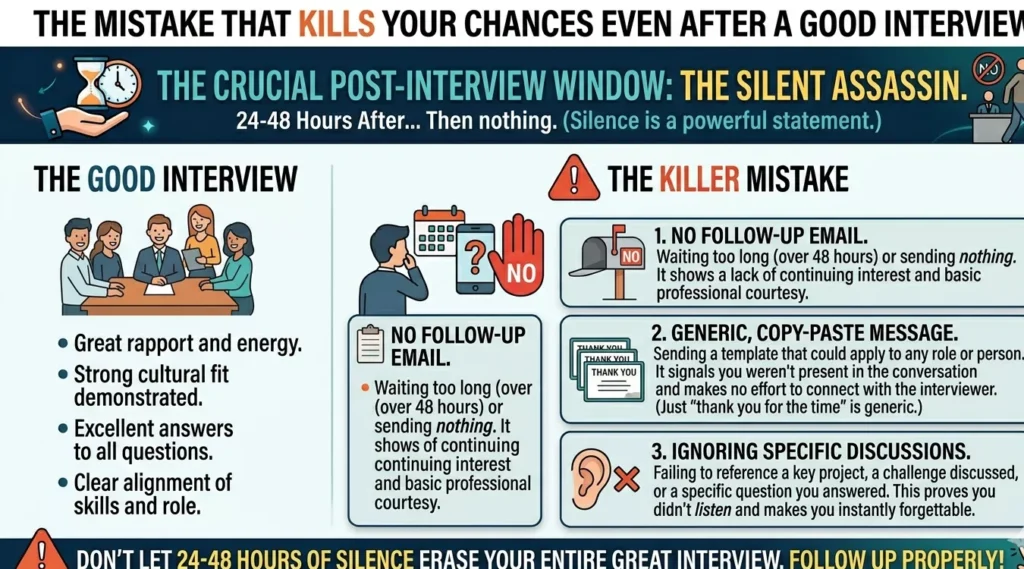
Not sending anything. Genuinely. A lot of candidates who interview well assume the work is done and wait. And in a close decision between two candidates, the one who sent a thoughtful follow up email especially one with a specific callback to the interview conversation has a real advantage over someone who went quiet.
Hiring managers are human. They remember who was engaged. A follow up email that references a real moment from the conversation signals that you were present, that you care about the role, and that you know how to communicate professionally.
None of that is complicated. It’s just a short email sent on time with one specific detail that proves you were actually paying attention. That’s the whole thing. Send it within 24 hours. Make it specific. Follow up once if you don’t hear back. Follow up one final time if you still don’t. Then move forward and keep your search going.
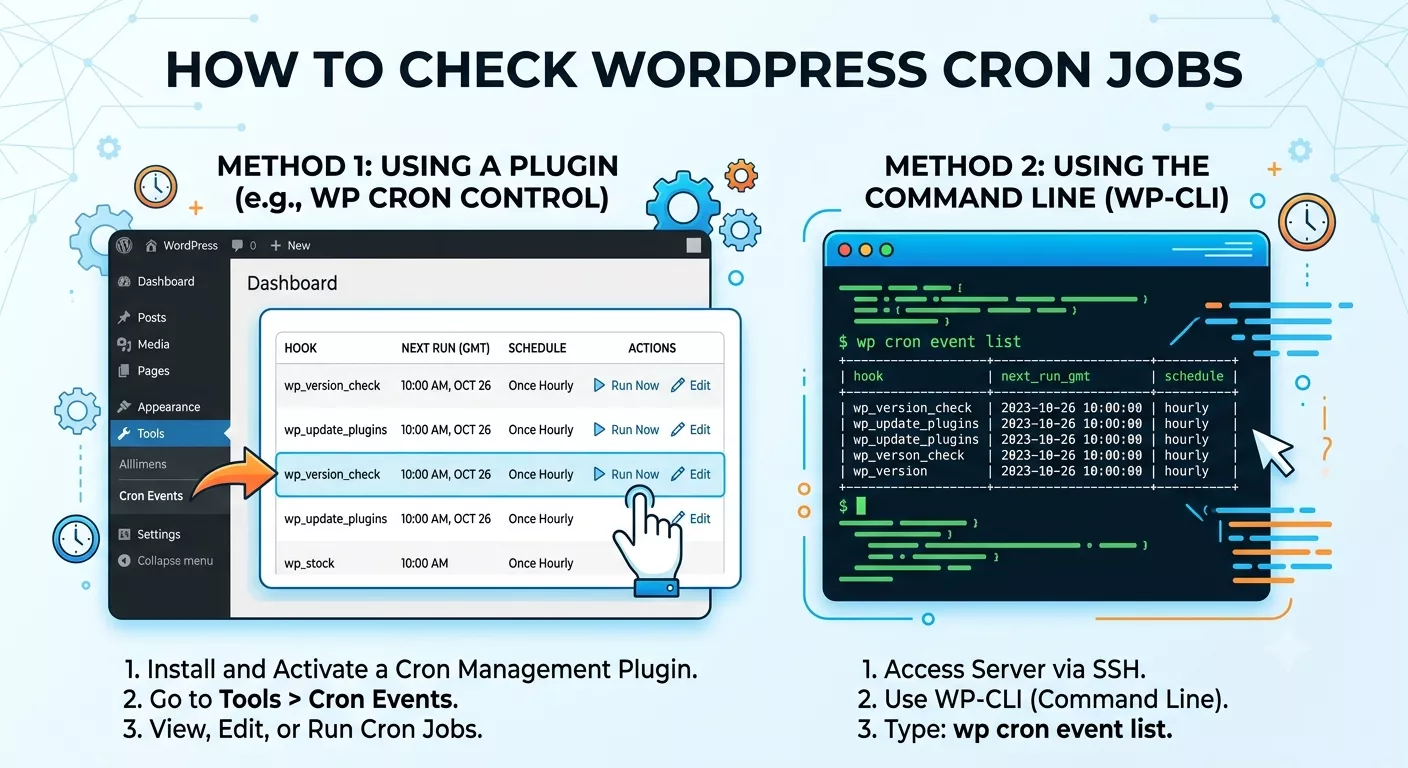
And if you’re applying to companies that run automated hiring workflows or tech-based screening systems, it helps to understand how backend processes work even something like knowing how WordPress cron jobs handle scheduled tasks can give you an edge when talking to a technical team about your understanding of automated systems. Simple. And most people still don’t do it.