Remote hiring changed the way people build careers in tech. A few years ago, many developers, designers, and IT support workers mostly searched inside their own cities. Now companies hire across countries and time zones, and that made competition tougher too. A polished LinkedIn profile matters more than people expect. Recruiters often check LinkedIn before they even open a resume. Someone looking for Remote IT Jobs can miss opportunities simply because their profile looks inactive or incomplete. The good part is that small profile changes sometimes bring noticeable results faster than endlessly applying to listings.
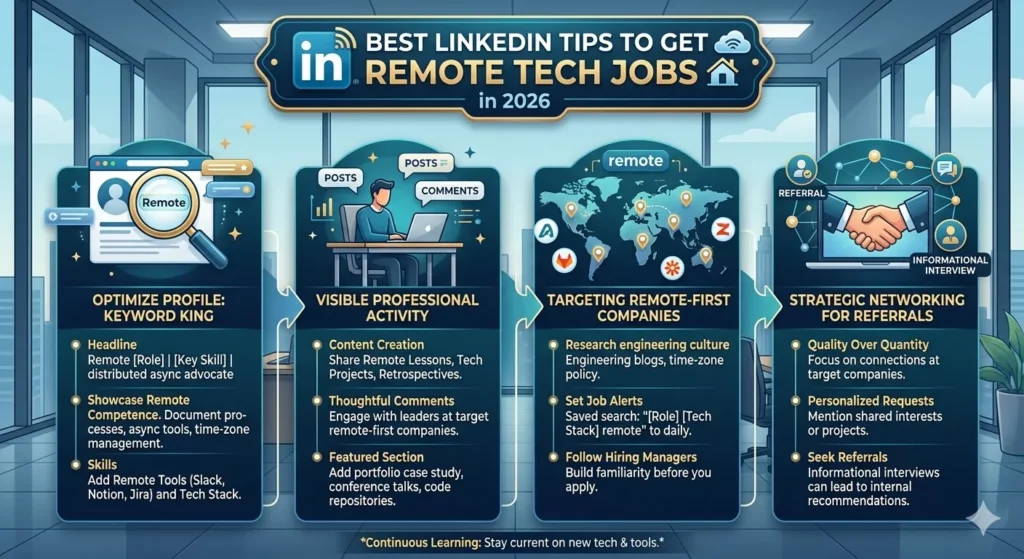
Table of Contents
LinkedIn tips to get remote tech jobs that actually help
A lot of advice online sounds repetitive. “Be active.” “Network more.” “Post consistently.” That is not wrong, but it skips the practical side. People searching for remote tech jobs usually want to know what recruiters really notice and what pushes profiles down in search results.
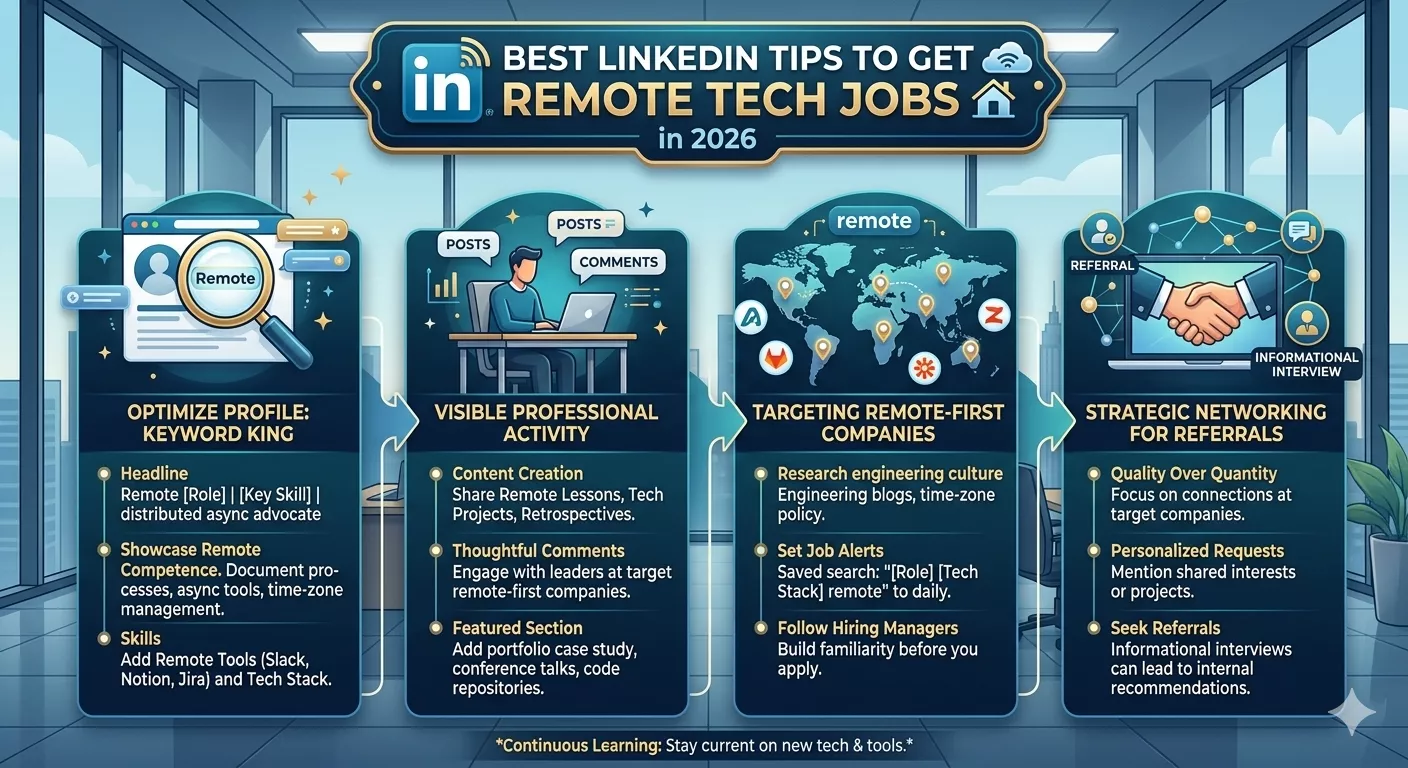
The first thing is profile clarity. Recruiters scanning hundreds of candidates do not spend several minutes decoding vague job titles. A headline like “Passionate Tech Enthusiast” tells them almost nothing. A better version is specific:
- Front-End Developer | React & TypeScript
- Remote DevOps Engineer | AWS & Kubernetes
- UI/UX Designer for SaaS Products
Clear positioning helps LinkedIn optimization because the platform indexes those keywords. It also helps the LinkedIn algorithm connect profiles with recruiter searches.
Another thing people ignore is activity history. A completely silent profile looks abandoned. You do not need daily motivational posts. Even short comments about projects, bug fixes, remote work setups, or software updates make your account appear active.
Why LinkedIn matters more for remote work
Companies hiring for remote work often receive applications from many countries. That means recruiters use filters heavily. They search by skills, certifications, previous companies, remote experience, and sometimes even communication style visible through posts.
This is why LinkedIn networking matters more in remote hiring compared to traditional office hiring. Employers cannot physically meet applicants early in the process, so profiles become the first impression.
A strong LinkedIn profile also helps with passive hiring. Sometimes recruiters contact people who never applied. This happens often in software developer jobs, cloud engineering roles, cybersecurity positions, and product-focused tech careers.
Many beginners ask whether they should study UX before UI design while building a tech profile. Discussions around can i learn UX without UI appear often in remote communities because recruiters sometimes search both skills together. Having at least basic understanding of user flows and design thinking helps even developers communicate better with teams.
Your headline decides whether recruiters click
People spend hours writing summaries but ignore the headline section. The headline is usually the first visible line in search results.
Weak headline example:
- “Looking for Opportunities”
Better headline example:
- Backend Developer | Node.js | REST APIs | Open to Remote Work
That second version instantly explains the candidate’s direction.
For remote tech jobs, include:
- Main specialization
- Key tools or languages
- Remote availability if relevant
A recruiter searching “React remote developer” is far more likely to find optimized profiles than generic ones.
The About section should sound human
This section often becomes robotic because people try too hard to sound professional. Recruiters read enough corporate language every day. A simple, direct tone usually works better.
Instead of:
“Results-driven professional with proven expertise in scalable solutions…”
Try:
“I build web applications mainly with React and Node.js. Most of my recent work involved SaaS dashboards and API integrations. I enjoy remote teams because communication stays documented and organized.”
That feels more natural. Good LinkedIn optimization is not about stuffing keywords awkwardly. Mention remote tech jobs naturally alongside experience, tools, and achievements.
Remote recruiters check consistency
One strange thing recruiters notice quickly is inconsistency between resumes and LinkedIn profiles. Dates mismatch. Skills appear in one place but not the other. Project details change.
That creates hesitation.
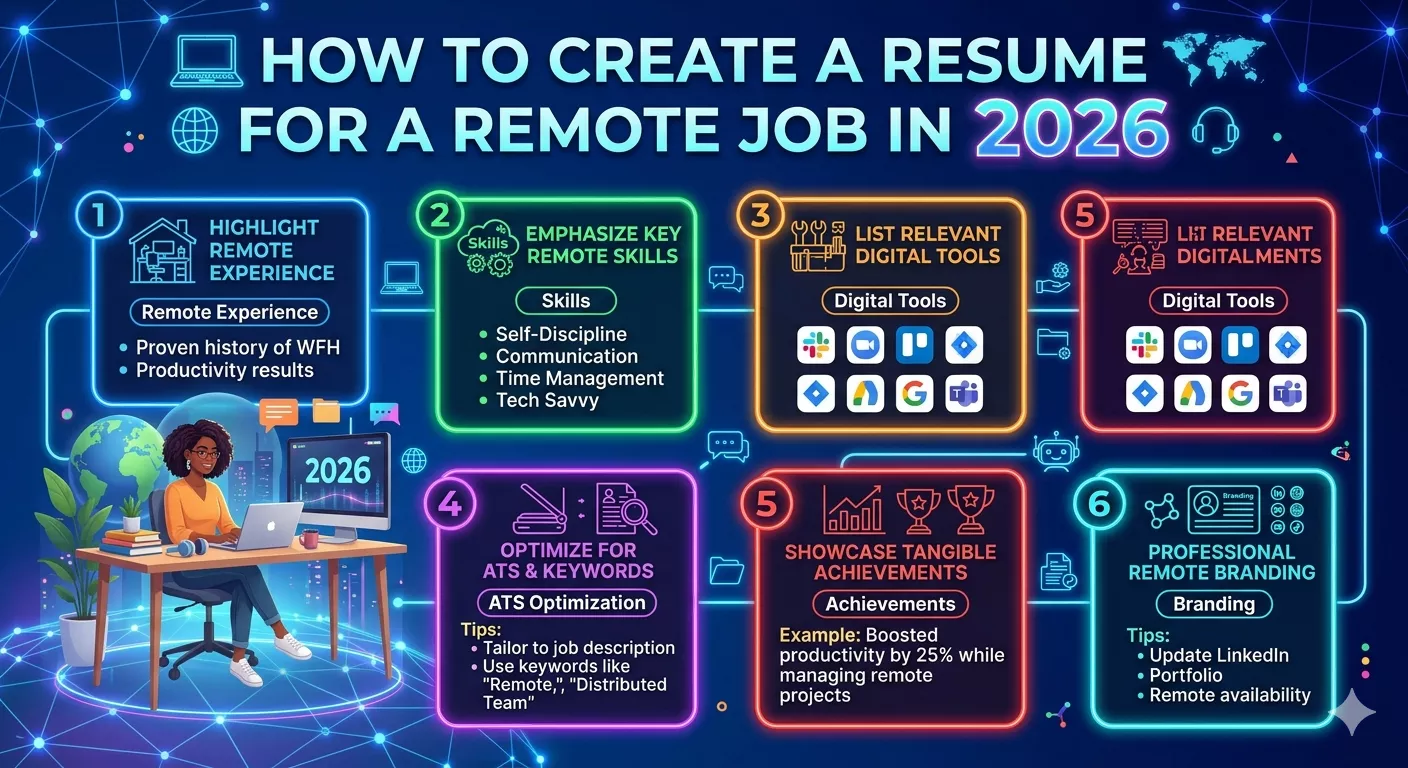
Your LinkedIn profile, resume optimization strategy, and portfolio should support each other instead of looking disconnected.
A simple structure works best:
| Section | What Recruiters Want |
|---|---|
| Headline | Clear role and skills |
| About | Human summary with specialization |
| Experience | Measurable contributions |
| Skills | Relevant technical stack |
| Activity | Signs of engagement |
| Portfolio | Real work examples |
For remote work hiring, communication consistency matters because companies already worry about managing distributed teams.
Skills sections still affect search visibility
Some people think skills sections are outdated. They still matter because LinkedIn search filters rely heavily on them.
Important skills for remote tech jobs may include:
- React
- Python
- AWS
- Docker
- UI Design
- Cybersecurity
- Remote collaboration
- Git
- API development
Profiles with complete skill sections often appear higher in recruiter searches. This also helps entry-level people. Someone applying as a ui ux designer with no experience can still improve visibility by adding accurate design tools, coursework, and portfolio skills rather than leaving sections empty.
Recommendations quietly build trust
Recommendations are underrated. One detailed recommendation from a manager or client sometimes matters more than dozens of endorsements.
Remote employers especially value comments about:
- Communication
- Reliability
- Async collaboration
- Deadline management
- Problem-solving
Those traits matter in remote work environments where supervision is limited. Ask former coworkers for short, honest recommendations. Avoid scripted paragraphs that sound fake.
Posting content helps more than most people think
You do not need influencer-style content. Recruiters simply want proof that you understand your field.
Examples:
- A quick explanation of fixing a deployment issue
- Thoughts on remote collaboration tools
- Small coding project screenshots
- Design process breakdowns
- Lessons learned from freelance tech jobs
This supports professional networking naturally without forcing constant self-promotion. Content activity also improves visibility through the LinkedIn algorithm. Active users appear more frequently in searches and feeds.
Networking works differently online
Traditional networking often meant events and business cards. LinkedIn networking feels slower but scales better.
A useful approach:
- Connect with recruiters in your niche
- Follow remote-first companies
- Comment thoughtfully on industry posts
- Join tech communities
- Message people after meaningful interaction
Cold messaging without context usually fails.
Good recruiter outreach is short and respectful:
“Hi, I saw your post about remote backend openings. My recent work focused on Node.js APIs and cloud deployment. I’d love to connect.” Simple works.
Remote employers care about communication signals
Hiring managers often assume technical skills can improve over time. Communication problems are harder to fix.
Your LinkedIn activity quietly reveals communication habits.
Signs recruiters notice:
- Clear writing
- Professional interaction
- Organized profile sections
- Consistent updates
- Calm responses in discussions
That matters for remote tech jobs because written communication becomes part of daily work.
Many professionals researching salary growth also search terms like how much ui ux salary on average because remote hiring changed compensation expectations across regions and industries.
Portfolio links matter more than certificates
Certificates help, but portfolios create stronger impressions. Developers should show:
- GitHub projects
- Live demos
- Technical writeups
Designers should show:
- Case studies
- Wireframes
- User research
- Final interfaces
Cybersecurity professionals can showcase:
- Labs
- Security writeups
- CTF participation
A LinkedIn profile connected to real work examples feels more trustworthy than a long certificate list alone.
Keywords should appear naturally
Keyword stuffing still happens constantly.
Bad example:
“Remote tech jobs remote work IT jobs remote developer remote software…”
That looks unnatural immediately.
Instead, place keywords naturally across:
- Headline
- About section
- Experience
- Skills
- Posts
Relevant keywords help LinkedIn optimization without damaging readability.
Useful phrases include:
- remote work
- software developer jobs
- work from home jobs
- online portfolio
- freelance tech jobs
- IT jobs remote
Recruiters search by problem-solving ability
Many applicants focus only on technologies. Recruiters often care more about outcomes.
Instead of:
“Worked with React”
Try:
“Built a dashboard that reduced reporting time for clients.”
Results stand out.
Even junior candidates applying for ui ux designer jobs or beginner developer roles can mention project impact from internships, freelance work, or personal projects.
Remote job applications should be selective
Mass applying rarely works well anymore.
A better job application strategy:
- Customize profile keywords slightly for target roles
- Match portfolio examples to the position
- Connect with team members before applying
- Research company culture
- Tailor messages
Remote companies often prioritize alignment over sheer application volume.
LinkedIn banners are small but noticeable
People ignore banners even though recruiters see them immediately.
A simple banner can include:
- Tech stack
- Design specialty
- Short tagline
- Portfolio URL
No need for flashy graphics. Clean layouts usually look more credible.
Experience descriptions should avoid generic phrases
Weak description:
“Responsible for software development.”
Better description:
“Built internal automation tools using Python and reduced manual reporting time.”
Specific details improve both recruiter interest and LinkedIn optimization. Even people transitioning from fields like content creation or customer support into tech careers can present transferable skills clearly.
Remote hiring values self-management
Remote employers worry about accountability. Your profile should quietly show independence.
Examples:
- Freelance experience
- Side projects
- Async collaboration tools
- Remote client communication
- Open-source contributions
People shifting into technical careers from adjacent roles like wordpress developer jobs often succeed by demonstrating project ownership rather than just listing tasks.
Engagement quality matters more than quantity
Commenting “Great post” everywhere does almost nothing.
Useful engagement includes:
- Adding insights
- Sharing brief experiences
- Asking thoughtful questions
- Discussing tools or workflows
This builds professional networking organically.
Recruiters sometimes review comments because they reveal how candidates communicate publicly.
Common LinkedIn mistakes hurting remote applicants
| Mistake | Why It Hurts |
|---|---|
| Generic headline | Weak search visibility |
| No profile photo | Lower trust |
| Empty About section | Lacks personality |
| No activity | Looks inactive |
| Keyword stuffing | Appears spammy |
| Missing portfolio | No proof of work |
| Poor grammar | Communication concerns |
These issues are surprisingly common even among technically skilled people.
Certifications still help in some areas
Not every field treats certificates equally.
Helpful areas include:
- Cloud computing
- Cybersecurity
- Data analytics
- Project management
For software developer jobs, practical work often outweighs certificates. For cybersecurity or cloud roles, certifications sometimes matter more. Still, they work best when combined with visible project experience.
Time zones and availability matter
- Some remote companies hire globally but still want overlapping work hours.
- Adding timezone availability or preferred working hours can help during recruiter outreach.
- That small detail sometimes prevents confusion later in interviews.
Consistency over perfection
A lot of people endlessly tweak profiles without actually applying or networking.
Perfect profiles rarely exist.
A strong LinkedIn profile usually comes from:
- Regular updates
- Real projects
- Meaningful interaction
- Clear specialization
- Steady visibility
Remote hiring moves quickly. Profiles showing ongoing activity tend to perform better than profiles edited once every six months.
Building visibility takes time
Some candidates improve profiles and expect immediate offers within days. Sometimes it happens, especially in high-demand tech careers. Often it takes several months of steady networking and profile activity.
LinkedIn networking compounds slowly:
- One recruiter connection leads to another
- One comment gets profile visits
- One project post attracts interviews
- One referral creates future opportunities
That gradual momentum matters more than viral attention.
Final thoughts on getting hired remotely
Remote hiring changed how people present themselves professionally. Skills still matter most, but visibility matters almost as much now. A talented developer with a weak LinkedIn profile may lose opportunities to someone slightly less experienced but easier to find.
The strongest approach is usually simple:
- Keep your LinkedIn profile clear
- Show real work
- Stay active enough to appear engaged
- Build genuine professional networking relationships
- Tailor your job search tips around the roles you actually want
That combination tends to work better than endlessly chasing hacks or shortcuts.