
Finding remote QA tester jobs for beginners can be a practical starting point for people interested in technology but not yet experienced in software development. Quality Assurance (QA) testers help companies identify software problems, check that applications work correctly, and improve the overall experience before products reach users. The good news is that some junior testing opportunities focus on manual testing, where programming knowledge may not be essential.
However, employers still expect beginners to understand testing fundamentals, document bugs accurately, and communicate effectively with development teams. If you’re considering software testing as a career, this guide explains what remote QA testers do, which skills you should learn, how to build a portfolio without professional experience, and how to prepare for your first job application.
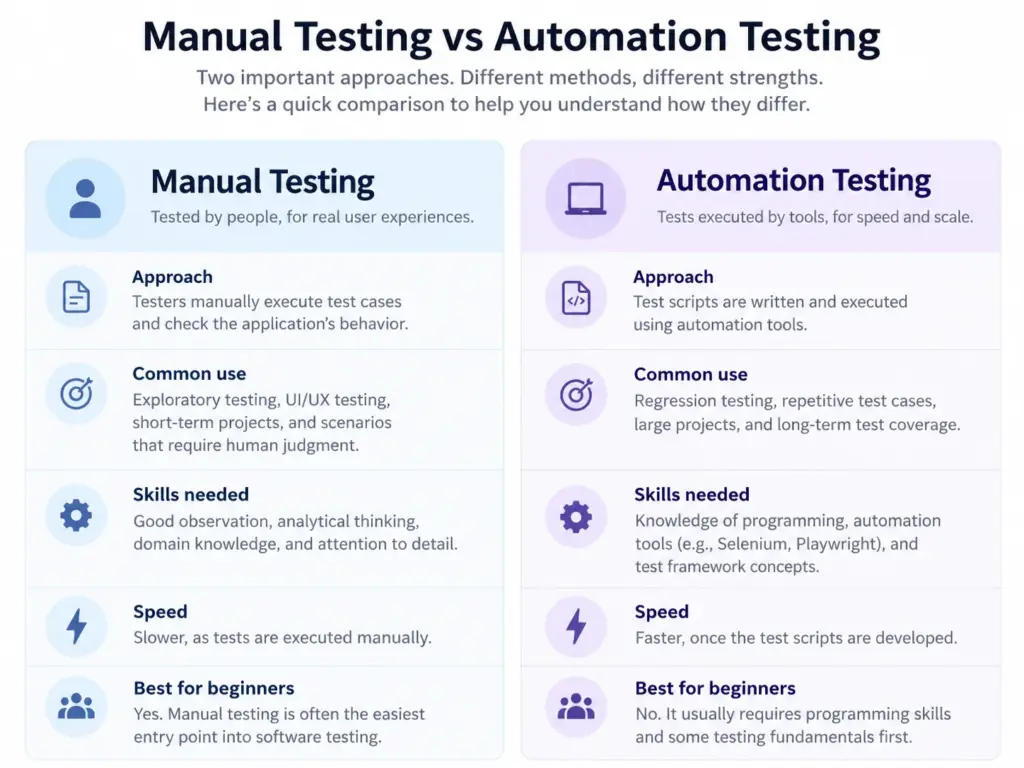
Table of Contents
What Is a Remote QA Tester?
A remote QA tester is a technology professional who checks websites, mobile applications, or software products for defects while working outside a traditional office. Their main responsibility is to evaluate whether software behaves as expected and report problems that may affect functionality, usability, or reliability. For example, imagine an online shopping website where customers can add products to a cart but cannot complete checkout. A QA tester would investigate the problem, document the actions that trigger it, and report the findings to the development team.
The work involves more than randomly clicking buttons. Testers follow requirements, create test scenarios, compare expected and actual results, and verify whether reported problems have been resolved. According to the U.S. Bureau of Labor Statistics, software quality assurance analysts and testers identify problems in applications and report defects. The occupation also involves teamwork with software developers and other technology professionals. For remote positions, these responsibilities are performed using online communication, testing, and project management tools.
Can Beginners Get Remote QA Tester Jobs Without Experience?
Yes, some employers consider beginners for junior QA roles, particularly when candidates demonstrate relevant skills through training, personal projects, internships, or supervised testing experience. However, entry-level does not always mean that no knowledge is required. Employers may expect familiarity with testing terminology, the ability to write test cases, and an understanding of how software development teams work.
For remote positions, communication and independent working skills are especially valuable because testers may collaborate with developers in different locations or time zones. A candidate who can clearly explain a software defect and provide accurate reproduction steps may be more useful than someone who has completed several courses but cannot demonstrate practical testing ability. Beginners should therefore focus on building evidence of their skills instead of relying exclusively on certificates. If you’re exploring other starting points, our guide to remote IT jobs with no experience covers additional beginner-friendly technology careers.
Manual QA Testing vs. Automation Testing
Understanding the difference between manual and automated testing is one of the first steps toward choosing a suitable QA career path.
Manual QA Testing
Manual testing involves checking software features through direct interaction, without relying on automated scripts to perform the testing steps. A manual tester might open an application, register an account, complete a form, navigate between screens, or attempt an online purchase. They compare the application’s behavior against the expected requirements and record any unexpected results. Manual testing is often a practical learning starting point because beginners can develop core testing skills before studying programming or automation frameworks. However, manual QA still requires logical thinking, attention to detail, and structured documentation.
Automation QA Testing
Automation testing uses specialized tools and scripts to run repeatable tests. For example, an automated test may check whether users can successfully log in after each software update. Automation can be particularly useful for regression testing, where previously working features need to be checked repeatedly.
Automation-oriented roles commonly require programming fundamentals and knowledge of tools such as Playwright, Selenium, or Cypress. For beginners, developing a strong understanding of manual testing first can make advanced automation concepts easier to learn.
| Feature | Manual Testing | Automation Testing |
| Programming knowledge | Not always required | Usually required |
| Primary approach | Human-executed test scenarios | Tool-driven scripted checks |
| Common uses | Exploratory and usability testing | Repeated regression checks |
| Beginner accessibility | Often easier to start learning | Requires additional technical preparation |
| Common career direction | Junior Manual QA Tester | QA Automation Engineer |
Neither approach completely replaces the other. Professional testing teams may use both, depending on their product and requirements.
Essential Skills for Remote QA Tester Jobs for Beginners
Learning the right skills is more valuable than trying to master every testing tool at once. Start with fundamental concepts and gradually develop the knowledge needed for specific job descriptions.
Understanding Software Testing Fundamentals
A beginner should understand why software is tested, how defects occur, and what different testing activities are intended to accomplish. Important concepts include functional testing, regression testing, smoke testing, exploratory testing, and usability testing. Functional testing checks whether a feature behaves according to requirements. Regression testing checks whether changes have affected previously working functionality. Exploratory testing involves investigating software while learning how it behaves, rather than following only predefined steps. The International Software Testing Qualifications Board (ISTQB) Foundation Level syllabus provides a structured reference covering these foundational topics.
Writing Effective Test Cases
A test case describes a specific condition or scenario that should be checked. For example, if you’re testing a login screen, one test case might confirm that a registered user can sign in with correct credentials. Another could check what happens when the password is incorrect. A useful test case normally identifies the objective, necessary starting conditions, actions to perform, expected result, and actual outcome. Practicing this process helps you develop organized testing habits and makes your findings easier for other team members to understand.
Creating Clear Bug Reports
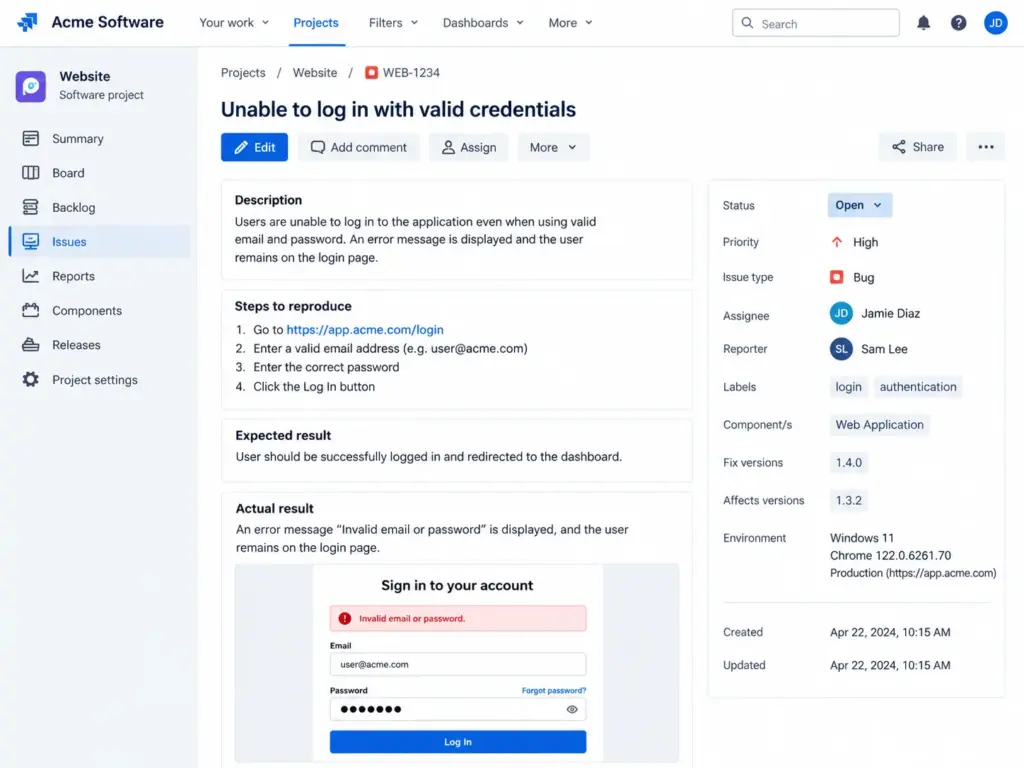
Bug reporting is one of the most important practical skills in software testing. When a tester discovers a problem, the report should explain exactly what happened and how someone else can reproduce it. Imagine a registration form that displays an error after the user enters valid information. Rather than reporting only that registration is broken, a useful report explains the device or browser used, the steps performed, the expected result, and the actual error. Screenshots or short recordings can provide additional context. Good documentation reduces unnecessary communication and helps developers investigate problems more efficiently.
Communication and Remote Collaboration
Remote QA testers must often explain complex issues through written messages, project management systems, and video meetings. They may also need to clarify requirements, discuss unexpected behavior, and follow up when fixes are ready for testing. Strong communication means sharing accurate information without unnecessarily lengthy explanations. Time management is equally important because testers may need to prioritize multiple issues and complete assigned testing before a release deadline.
Best Tools to Learn for Remote QA Testing
You don’t need advanced knowledge of dozens of tools to begin learning QA testing. A few widely used technologies can provide a useful foundation. Jira is commonly used to organize tasks and track software defects. Beginners can benefit from learning how issues move through a typical development workflow. Postman is useful for understanding and testing APIs. Even if you’re mainly interested in manual testing, basic API knowledge can broaden your understanding of how applications exchange information. Browser Developer Tools can help you inspect network requests, identify console messages, and investigate website behavior.
For automation-focused learning, Playwright, Selenium, and Cypress are commonly encountered testing frameworks. Choose tools according to your intended role. A beginner applying for manual QA positions should prioritize test design and bug reporting before advanced automation skills.
How to Build a QA Testing Portfolio Without Experience
A practical QA portfolio helps employers evaluate what you can do when you don’t have previous professional testing experience. You can start by selecting a publicly accessible demo application or a website that permits testing. Choose a few features, such as login, registration, search, or form submission, and prepare structured test cases. Document the expected behavior, perform the tests, and record your findings.
If you discover genuine problems, create sample bug reports explaining the issue, reproduction steps, and supporting evidence. You can organize these materials in a PDF, a personal website, or a suitable GitHub repository. A beginner portfolio doesn’t need to contain dozens of projects. Two carefully documented examples can be more useful than a large collection of incomplete work. Always label practice projects accurately. Do not describe personal testing exercises as paid professional experience or claim that a company authorized testing when it did not.
How to Find and Apply for Remote QA Tester Jobs
Finding suitable opportunities requires more than searching for the exact phrase “QA tester.” Companies use different job titles for similar responsibilities. You may encounter positions advertised as Junior QA Tester, Manual Software Tester, Software Test Analyst, Junior Quality Assurance Analyst, or Entry-Level QA Engineer.
Some software testing jobs from home may focus on websites and mobile applications, while others involve enterprise systems or specialized products. Start by reviewing job descriptions and identifying the skills employers repeatedly mention.
Look carefully at experience requirements. A position labeled junior may still request previous employment, automation knowledge, or industry-specific experience. Use Remote IT Jobs to explore technology career opportunities, and compare relevant listings with your current qualifications.
You can also review company career pages and established professional job platforms. Before applying, verify the employer and check whether the role is genuinely remote. Some positions restrict employment to particular countries, states, or time zones, even when the advertisement says remote.
How to Prepare Your Resume for an Entry-Level QA Role
Your resume should focus on relevant knowledge, practical examples, and transferable skills. Start with a clear professional summary explaining your interest in software quality assurance. Include familiar testing concepts, tools you have practiced, and completed training. If you have created a testing portfolio, provide a link and briefly describe its contents.
For example, you might explain that you designed test scenarios for a demonstration shopping application and documented usability or functional issues. Candidates transitioning from customer support, administration, or another profession can also highlight transferable skills. Attention to detail, accurate documentation, communication, and structured problem-solving are relevant to testing work. Tailor your resume to each position instead of sending an identical application to every employer. Most importantly, don’t claim proficiency with tools you haven’t practiced.
Common QA Testing Interview Questions
Entry-level QA interviews often assess how candidates think through software problems. An employer may ask you to explain the difference between quality assurance and software testing, describe how you would test a login page, or explain what information belongs in a bug report. You might also be asked what you would do if a developer could not reproduce a defect.
A useful answer would explain that you would verify the environment, repeat the steps, collect additional evidence, and communicate the findings clearly. Remote interviews may include questions about time management, independent work, and collaboration across different time zones. Prepare examples that show how you organize information, solve problems, and respond when something unexpected happens.
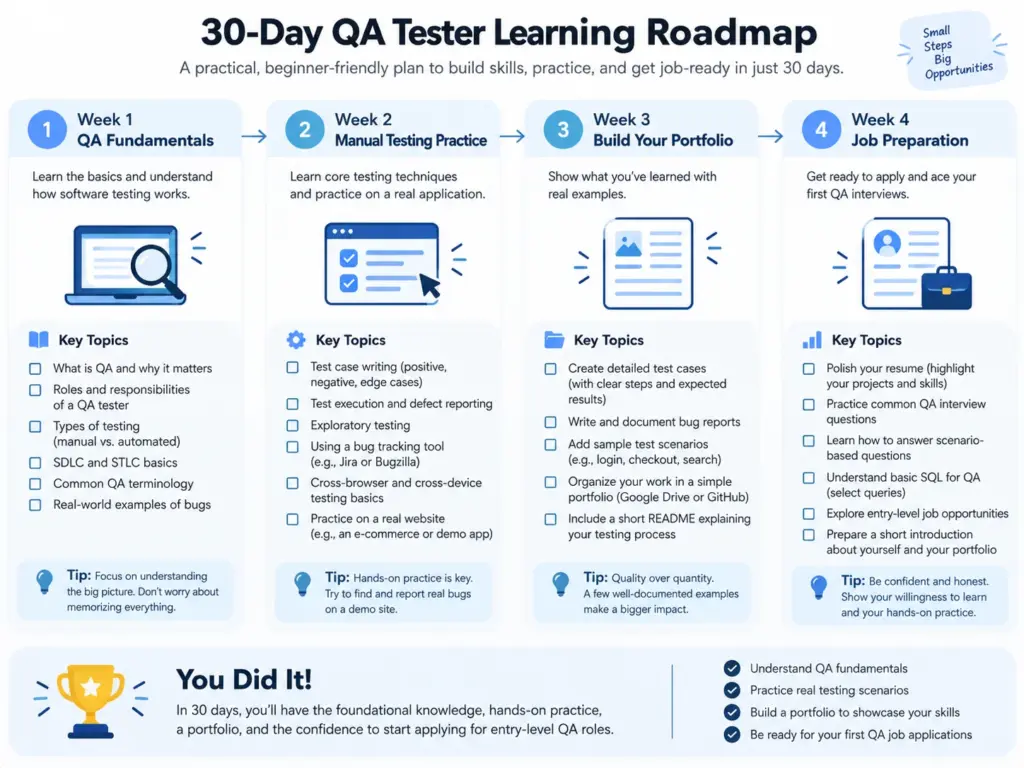
A Practical 30-Day QA Learning Plan
A structured month of learning can help you develop foundational skills, although it won’t automatically make you job-ready.
Week 1: Understand Testing Concepts
Study fundamental software testing terminology and learn how testing fits into the development process. Pay attention to test scenarios, defects, expected results, and common types of testing.
Week 2: Practice Manual Testing
Choose a permitted practice application and create test cases for its main features. Work through the scenarios and record your observations.
Week 3: Create a Portfolio
Organize your test cases and sample bug reports into a readable portfolio. Include short explanations of your testing approach and findings.
Week 4: Prepare for Applications
Review junior QA job descriptions, update your resume, practice interview questions, and identify positions aligned with your knowledge.
Continue improving your portfolio while applying. Learning and job searching can happen alongside one another.
Common Mistakes Beginners Should Avoid
One common mistake is assuming that software testing requires no technical understanding.
Although manual testing may not require programming, effective testers still need structured reasoning and knowledge of software behavior. Another mistake is collecting certificates without demonstrating practical skills. Courses can provide useful foundations, but employers may also want evidence that you can apply what you’ve learned.
Some candidates focus entirely on automation tools before understanding basic test design. This can make it difficult to explain why a test is needed or what its results mean. Finally, avoid applying indiscriminately to advanced testing positions. Focus on realistic junior opportunities and carefully review employment location restrictions.
Frequently Asked Questions
Can I get a remote QA tester job with no experience?
Some junior QA roles accept beginners who demonstrate testing fundamentals, practical projects, and clear communication. Requirements vary, and remote openings may be competitive.
Does manual QA testing require coding?
Not always. Many manual testing tasks don’t require programming, although basic technical knowledge and familiarity with software development can be beneficial.
What qualifications do QA testers need?
Requirements vary. Some employers expect a relevant degree, while others consider practical experience, training, or certifications. Technical knowledge and testing ability remain important.
Which tools should a beginner QA tester learn?
Jira, browser Developer Tools, and Postman are useful starting points. Automation tools can be explored later if they match your intended career path.
Is ISTQB certification necessary for QA testing?
ISTQB certification is not universally required. It can demonstrate knowledge of testing concepts, but employers may also evaluate practical projects and experience.
Can QA testing be done entirely from home?
Yes, some QA positions are fully remote. However, certain employers require office attendance, specific equipment, approved locations, or defined working hours.
How long does it take to learn manual QA testing?
The learning timeline varies with your background, practice, and target role. A month can introduce basic concepts, but developing job-ready skills often requires continued practice.
Final Thoughts
Finding remote QA tester jobs for beginners starts with understanding how software testing works and learning to demonstrate your abilities through practical examples. Manual testing offers a useful introduction to the QA profession, while automation can become a future specialization as your technical skills develop. Focus on understanding testing fundamentals, creating clear test cases, documenting bugs, and building a portfolio that shows your approach to real problems. As you develop your skills, explore Remote IT Jobs and look for junior QA opportunities that match your experience, location, and career goals.